
All articles

Probiotic Characterization: Demonstrating Safety and Substantiating Activity

Published on 13/04/26 in the following categories Microbiota

Probiotics are often presented as a simple category. In reality, their characterization has become a demanding scientific and regulatory exercise. It is no longer enough to identify a species or to invoke a favorable history of use: the demonstration must now be conducted at the strain level, in a way that is consistent with the intended use, the target population, and the applicable regulatory framework. In the main reference frameworks, a microorganism can be qualified as a probiotic in the strict sense only if it is sufficiently characterized, safe for its intended use, alive at a relevant dose until the end of the product’s shelf life, and associated with a documented health benefit. [1,5,7,8]

The key question therefore becomes: what can we robustly demonstrate about its identity, safety, and functional activity? This is particularly true for new or poorly documented strains, for which taxonomy alone is not sufficient. The EFSA, GRAS, and Canadian frameworks converge on one central point: useful characterization is strain-level characterization interpreted in light of the final use. [1-6]

Starting point: Whole Genome Sequencing


In current practice, Whole Genome Sequencing (WGS) has become the foundation of candidate strain characterization. It makes it possible to confirm taxonomic identity, detect genes associated with antimicrobial resistance, virulence, or other safety determinants, and examine the genetic environment of these sequences: plasmids, mobile elements, integration regions, or other supports likely to promote transfer. [1-3]


However, the presence of a gene is not, by itself, proof of a functional risk. A putative determinant may be truncated, silent, not translated, or non-functional. Conversely, a hit on a clinically relevant AMR gene remains a signal that must be investigated seriously. The correct interpretation is therefore to cross four levels of information: presence of the determinant, sequence integrity, genetic context, and consistency with the phenotype. This is where one moves from simple genomic annotation to true strain characterization. [2,3]
Antimicrobial resistance: the genome guides, the phenotype decides


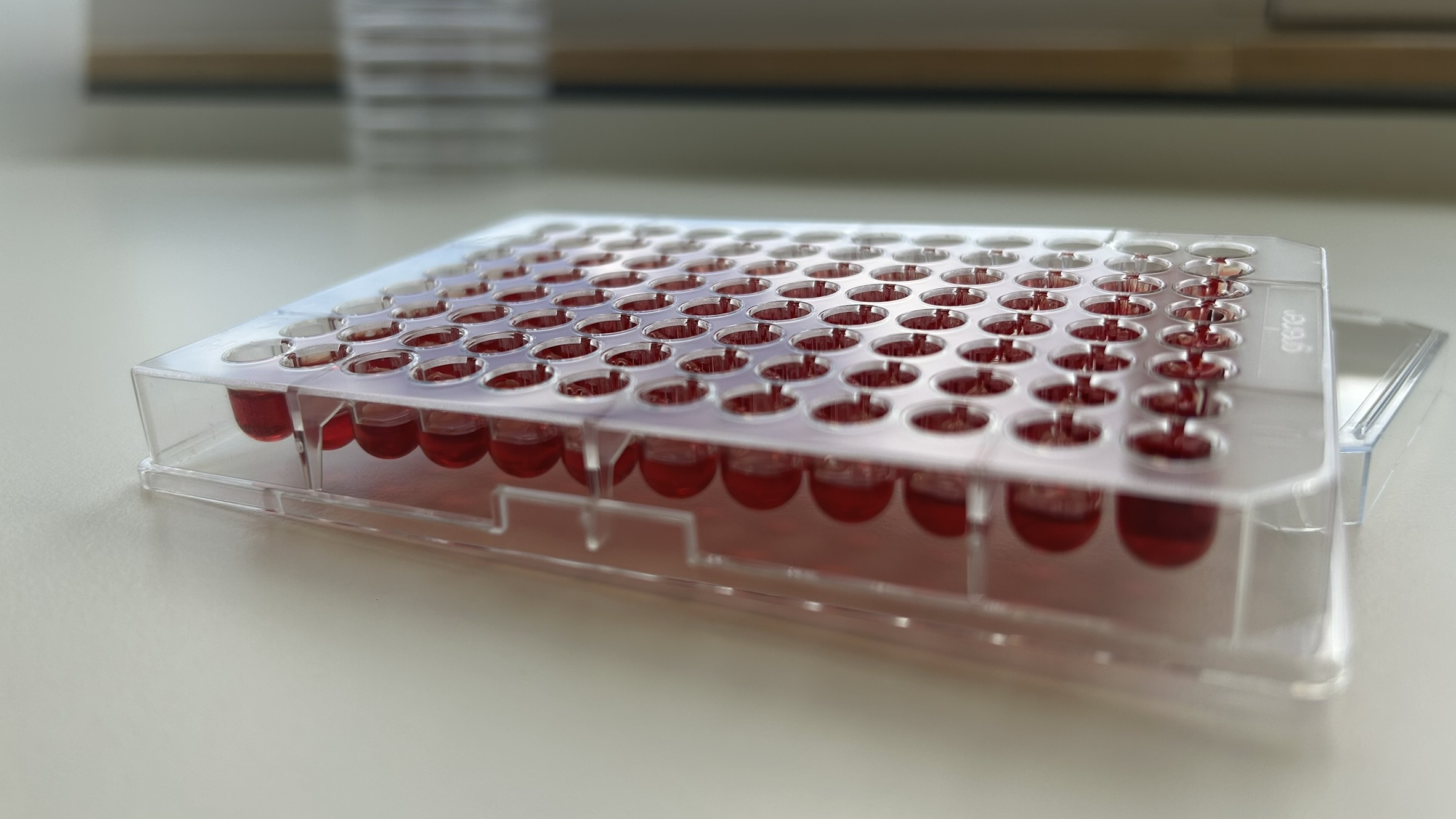
A genomic assessment alone is not sufficient. To properly characterize antimicrobial resistance, the phenotype must be measured, in particular the MICs of antibiotics of interest, using methods adapted to the strain under study. For lactic acid bacteria and bifidobacteria, reference frameworks rely in particular on ISO 10932/IDF 223. For other strict anaerobes, the approach is classically based on CLSI M11. At Smaltis, this logic is complemented, when necessary, by a reasoned adaptation of culture conditions and expert interpretation for demanding or atypical strains.


When cut-offs or interpretive thresholds exist, they structure the analysis. When they do not – which is common for new or poorly documented strains – the evaluation has to go further: compare with control strains, reason in terms of wild-type versus non-wild-type profiles, use phylogenetically relevant comparators, and relate the results to the genetic context observed by WGS. The challenge is not simply to say that a strain is ‘susceptible’ or ‘resistant’ to a given molecule, but to understand whether the observed signal reflects an intrinsic background, an acquired determinant, or a potentially transferable mechanism. [2,3]

Safety: going beyond genomic keywords


The safety of a probiotic strain cannot be reduced to its levels of resistance to antibiotics. The search for genes associated with virulence, toxigenicity, or other undesirable determinants is essential, but here again it does not replace targeted experimental characterization. Depending on the strain and the intended application, this may lead to documenting the absence of hemolysis, the absence of cytotoxic effects, the absence of deleterious impact on epithelial integrity, or other signals compatible with an opportunistic profile. The objective is to generate a level of evidence that is consistent with the strain’s actual risk. [1,2,7]


In other words, the right strategy is to start from the WGS data, identify points of attention, and then select the in vitro assays that will confirm, rule out, or clarify those signals. [1-3]

Efficacy: what in vitro models can demonstrate, and what they cannot


The objective is to produce mechanistic and discriminating evidence that is useful for selecting, comparing, and understanding strains. In vitro assays can therefore support the biological plausibility of a benefit, but they do not replace clinical demonstration when a health claim is to be made in the strict sense. [5,7,8]


Three areas are particularly relevant. The first concerns interactions with the microbiota and pathogens: growth inhibition, production of antagonistic molecules, competition for adhesion, or exclusion of undesirable bacteria. The second concerns the intestinal barrier, with models such as Caco-2, HT-29, or T84 used to assess TEER, permeability, tight junctions, or the mucosal response. The third concerns immunomodulation, through measurable signals such as cytokines and the responses of epithelial cells, macrophages, or PBMCs. In every case, the value of in vitro models lies in documenting a plausible mechanism of action and ranking strains, not in claiming a clinical benefit on their own. [9-11]


The gut-brain axis is a case apart. It is a very attractive field, but one that is still only weakly standardized in the laboratory. Conventional 2D models capture only part of it indirectly. The most relevant approaches today are integrated systems such as organoids and gut-on-chip or even gut-brain-on-chip devices. These models are promising, but they remain advanced tools rather than universal routine standards. [12]

The Smaltis approach

At Smaltis, characterizing a probiotic means generating interpretable data: identity confirmed by WGS, reasoned interpretation of resistance or virulence genes, analysis of the genetic context, phenotyping of antimicrobial susceptibility, and targeted functional assays according to the strain’s intended promise. For established strains, this strengthens a dossier. For new strains, above all, it prevents conclusions from being drawn too quickly.

Ultimately, characterizing a probiotic today means demonstrating, strain by strain, that a microorganism is precisely identified, does not present an unacceptable risk in light of its intended use, and shows in vitro activity consistent with the expected benefit. It is precisely in this space – between standardization, expert interpretation, and bespoke development – that the difference is made between a strain that is merely interesting and one that is genuinely developable. [1-3,5,7]

For further reading: 

[1] EFSA Scientific Committee. Guidance on the characterisation of microorganisms in support of the risk assessment of products used in the food chain. EFSA Journal, 2025.

[2] EFSA. Statement on the requirements for whole genome sequence analysis of microorganisms intentionally used in the food chain. EFSA Journal, 2024.

[3] EFSA BIOHAZ Panel. Statement on how to interpret the QPS qualification on “acquired antimicrobial resistance genes”. EFSA Journal, 2023.

[4] EFSA. Qualified Presumption of Safety (QPS), page thématique et mises à jour de la liste QPS.

[5] U.S. FDA. Generally Recognized as Safe (GRAS) et 21 CFR 170.30.

[6] Health Canada. Notice – Product Licence Applications for Natural Health Products Containing Probiotics.

[7] FAO/WHO. Guidelines for the Evaluation of Probiotics in Food. 2002.

[8] Binda S, Hill C, Johansen E, et al. Criteria to Qualify Microorganisms as “Probiotic” in Foods and Dietary Supplements. Frontiers in Microbiology, 2020.

[9] Monteagudo-Mera A, Rastall RA, Gibson GR, Charalampopoulos D, Chatzifragkou A. Adhesion mechanisms mediated by probiotics and prebiotics and their potential impact on human health. Applied Microbiology and Biotechnology, 2019.

[10] Zheng Y, Zhang Z, Tang P, et al. Probiotics fortify intestinal barrier function: a systematic review and meta-analysis. Frontiers in Immunology, 2023.

[11] Min S, Than N, Shin YC, et al. Live probiotic bacteria administered in a pathomimetic Leaky Gut Chip ameliorate impaired epithelial barrier and mucosal inflammation. Scientific Reports, 2022.

[12] Moradian H, Gabriel T, Barrau M, Roblin X, Paul S. New methods to unveil host-microbe interaction mechanisms along the microbiota-gut-brain-axis. Gut Microbes, 2024.

News and articles

The Story of a Microbiota That Became a Medicine

Once upon a time, in the hospitals of the twenty-first century, there was an infection that even antibiotics could no longer silence. An opportunistic infection caused by a bacterium called Clostridioides difficile, it often appeared in patients who were already vulnerable… and, above all, already heavily treated. Let us look back at the history of this infection, which gave rise to new therapeutic approaches.

READ THE POST

Probiotic Characterization: Demonstrating Safety and Substantiating Activity

Probiotics are often presented as a simple category. In reality, their characterization has become a demanding scientific and regulatory exercise. It is no longer enough to identify a species or to invoke a favorable history of use: the demonstration must now be conducted at the strain level, in a way that is consistent with the intended use, the target population, and the applicable regulatory framework. In the main reference frameworks, a microorganism can be qualified as a probiotic in the strict sense only if it is sufficiently characterized, safe for its intended use, alive at a relevant dose until the end of the product’s shelf life, and associated with a documented health benefit. [1,5,7,8]

The key question therefore becomes: what can we robustly demonstrate about its identity, safety, and functional activity? This is particularly true for new or poorly documented strains, for which taxonomy alone is not sufficient. The EFSA, GRAS, and Canadian frameworks converge on one central point: useful characterization is strain-level characterization interpreted in light of the final use. [1-6]

READ THE POST

Designing Bacterial Mutants: From Gene Editing to Robust Strain Engineering

The construction of bacterial mutants is a cornerstone of microbiology. Historically used to decipher gene function, it now plays an equally strategic role in bioproduction, biotechnology, and the development of therapeutic bacteria, where the engineered strain itself may ultimately become the final product.

This shift has profoundly changed how mutagenesis projects are approached. Today, the objective is no longer simply to modify a gene, but to design a strain aligned with its final application, operational constraints, and regulatory expectations.

READ THE POST

Lugdunin: the secret weapon of an indomitable bacterium

Once upon a time, an invisible battle was raging deep inside our noses. A microscopic battlefield, where bacteria fought relentlessly to defend their territory. Picture a small village of indomitable Gauls, surrounded on all sides… but instead of Romans, it’s microbes. And in this surprisingly strategic setting, a most unexpected antibiotic was discovered: lugdunin.

READ THE POST

2026: Taking on New Scientific Challenges Together

As we step into 2026, the entire Smaltis team sends you our warmest wishes. May this new year bring clarity, creativity, meaningful collaborations — and a few scientific breakthroughs that get the attention they deserve.

READ THE POST

Antimicrobial activity testing: measuring, understanding, and anticipating resistance

Every day, antimicrobials face their natural adversaries: bacteria.
But in this silent war, nothing remains static — bacteria learn, adapt, defend themselves… and develop increasingly sophisticated resistance mechanisms.
Smaltis is a microbiology CRO specialized in the study of antimicrobial resistance and the preclinical development of antimicrobials.
We support the developers of new antibiotics, peptides, biocides, and other anti-infective agents with a comprehensive panel of in vitro assays designed to meet the most demanding R&D challenges.

READ THE POST

Meeting the Innovation

Smaltis at the Key Industry Events of Autumn 2025! From medical devices to biotherapies, from fundamental research to industrial production, we meet project leaders to better understand microbiology needs and build new collaborations.

READ THE POST

New Offer Structure: 2 Business Units Supporting Your Projects

At Smaltis, our ambition remains unchanged: bringing microbiological excellence to your innovations.
To better address the diversity of your needs, we have structured our offer around 2 complementary Business Units, true pillars of our scientific and technical commitment.

READ THE POST

Malassezia: Cultivating the Invisible – A Challenge Met

Some yeasts are particularly resistant… especially Malassezia restricta.

This lipophilic yeast, naturally present on human skin, is involved in various imbalances of the skin microbiota, notably those linked to dandruff or seborrheic dermatitis. But cultivating it in the laboratory is no easy task!

READ THE POST

Talk and Cheese

Once upon a time was cheese, a high place of communication between fungi and bacteria.

Attracted by the smell of French cheeses, a team from Tufts University published work on how, in Camembert, Roquefort and other festivities, bacteria use compounds produced by fungi and adapt their behavior.

READ THE POST

Let's study your project!

Are you interested in our services? Ask our experts to study your needs and design a tailor-made collaboration with you.

Book a discovery call