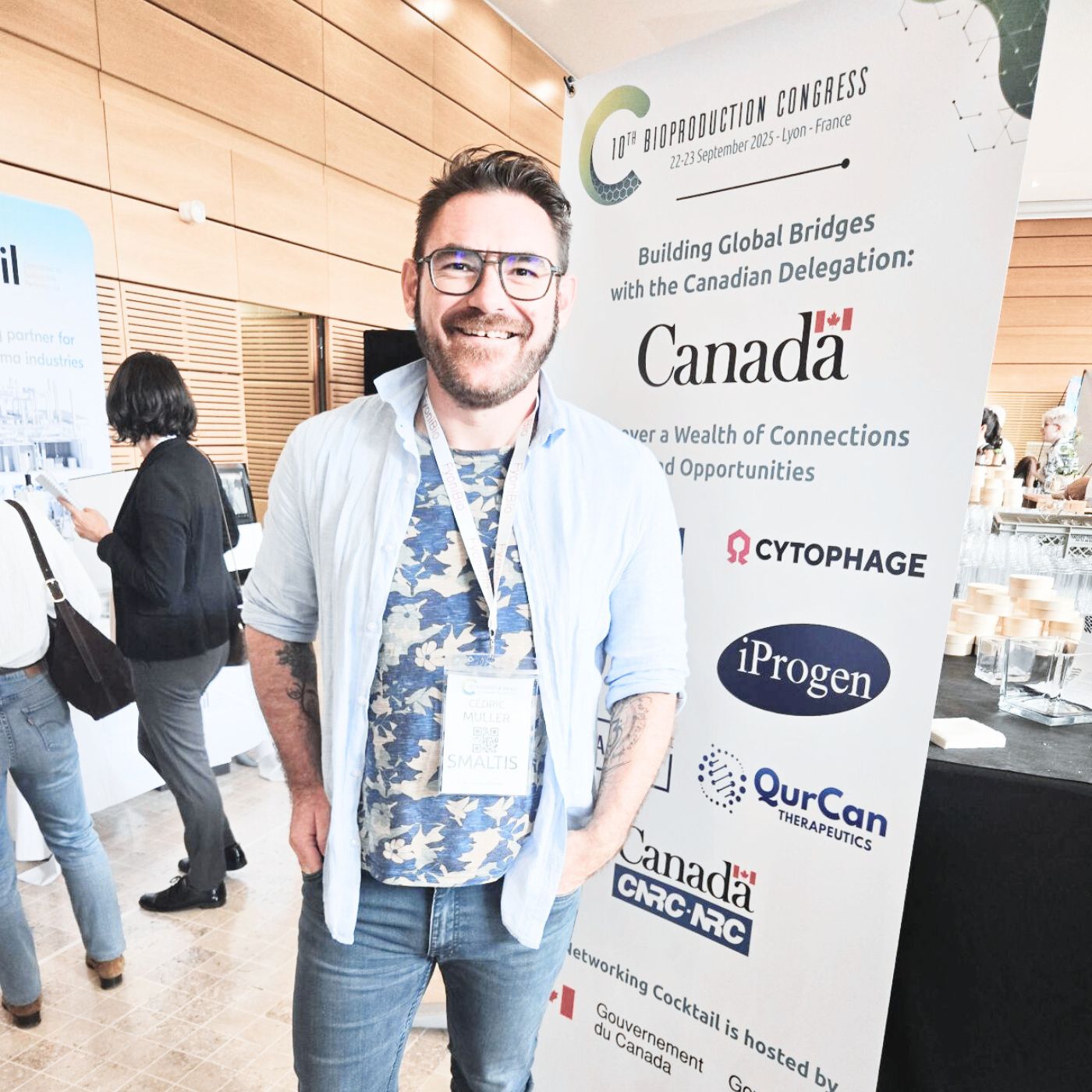
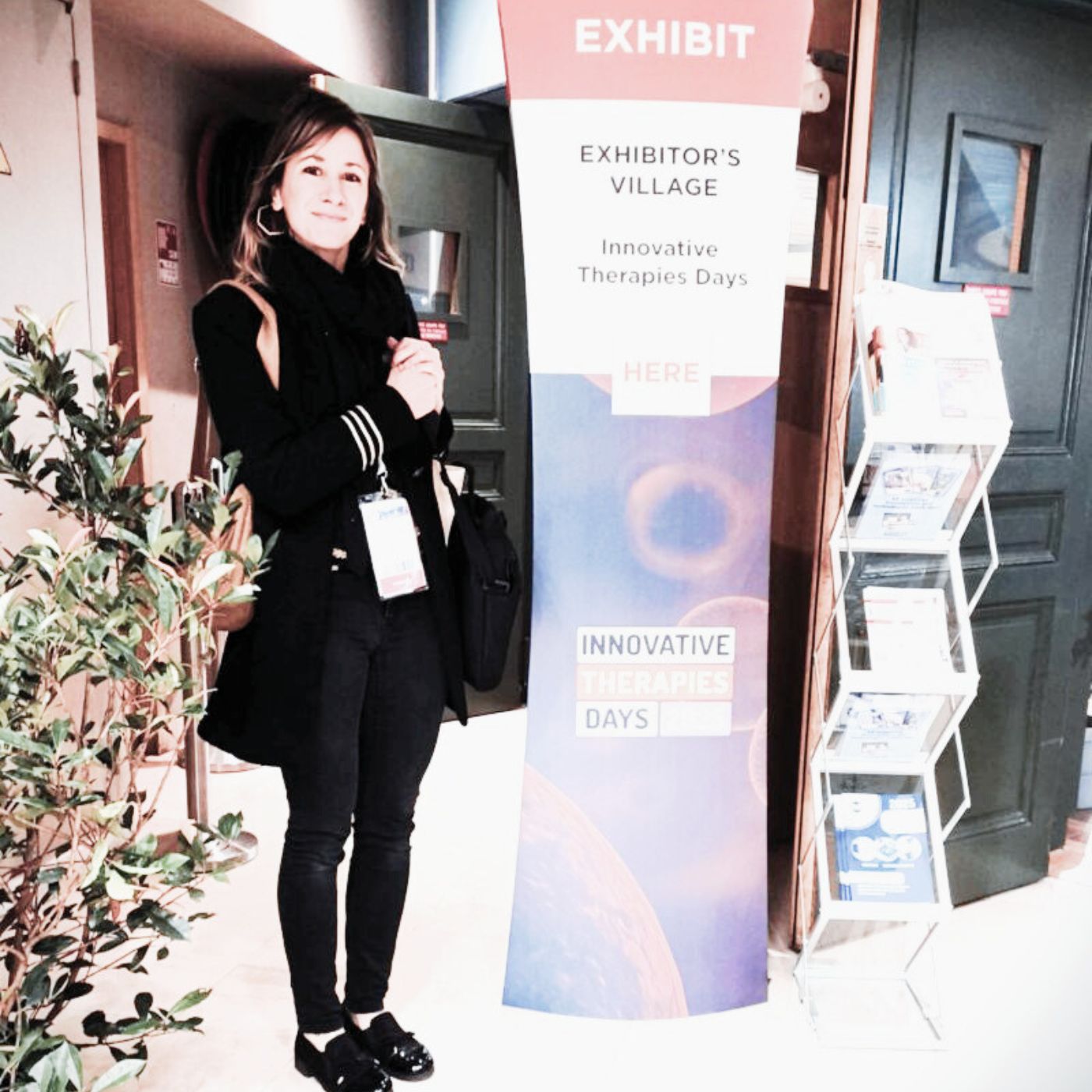
Smaltis at the Key Industry Events of Autumn 2025! From medical devices to biotherapies, from fundamental research to industrial production, we meet project leaders to better understand microbiology needs and build new collaborations.
Over the past few weeks, our teams have had the pleasure of taking part in several major events dedicated to innovation in healthcare:
These events offer valuable opportunities to exchange ideas with researchers, industry representatives, start-ups and institutions, and to deepen our understanding of the current challenges in health, production, and regulation.
The diversity of these events highlights the many ways microbiology adds value:
In research, through the development and validation of innovative microbial models to better understand microorganism–host interactions.
In production, through reliable, standardized solutions to control, secure, and qualify biological products, biotherapies, or medical devices.
Each meeting is an opportunity for us to listen, learn, and identify new collaboration topics where our expertise can help turn ideas into concrete solutions.
These valuable exchanges strengthen our conviction that microbiology lies at the heart of many key issues — from therapeutic efficacy to product safety and industrial performance.
We warmly thank everyone who took the time to meet and exchange with us during these events — and we look forward to continuing these discussions around future collaborative projects.
See you soon at upcoming events!
News and articles
Once upon a time… the smell of rain
Once upon a time, there was a scent so familiar that it was given its own name: petrichor.
It is the unmistakable fragrance that rises from the ground after the first drops of a summer rain fall onto dry soil. A comforting, almost universal scent that evokes woodland walks, gardens after a thunderstorm, or cherished childhood memories. For centuries, people simply believed it was the smell of wet earth. The truth, however, proved far more fascinating.
Management of Microbiological Contamination: Identifying, Understanding and Preventing Recurrence
Microbiological contamination is not limited to a non-compliant result. In R&D development, quality control, an industrial process or biological production, it immediately raises concrete questions: where does the contaminant come from, is it isolated or recurrent, what is its impact, and how can its reappearance be prevented?
The response is not simply to identify the bacterium and then restart the process. To achieve lasting control of bacterial contamination, the investigation must be able to connect laboratory observations with the real operational context: samples, flows, raw materials, equipment, cleaning, disinfection and field practices.
At Smaltis, we approach these situations as a structured microbiological investigation: understanding the problem, isolating the contaminants, identifying and comparing the isolates, preserving useful material, and then testing appropriate prevention solutions.
Skin Microbiome: Cultivating Rigor to Objectify Innovation
The skin microbiome is not mere scenery. It is a functional component of the skin, involved in protection against pathogens, immune dialogue, and the modulation of inflammation. It is a dynamic ecosystem shaped by subtle interactions between bacteria, yeasts, the host, and the environment.
Our approach is grounded in a simple conviction: understanding a microbiome is not merely about identifying it. It is about knowing how to culture it, interrogate it, and generate scientifically defensible data.
This is precisely how we approach the skin microbiome: as a complex ecosystem whose actors, dynamics, and mechanisms must be mastered before attempting to modulate its balance.
Once upon a time, in the hospitals of the twenty-first century, there was an infection that even antibiotics could no longer silence. An opportunistic infection caused by a bacterium called Clostridioides difficile, it often appeared in patients who were already vulnerable… and, above all, already heavily treated. Let us look back at the history of this infection, which gave rise to new therapeutic approaches.
Probiotic Characterization: Demonstrating Safety and Substantiating Activity
Probiotics are often presented as a simple category. In reality, their characterization has become a demanding scientific and regulatory exercise. It is no longer enough to identify a species or to invoke a favorable history of use: the demonstration must now be conducted at the strain level, in a way that is consistent with the intended use, the target population, and the applicable regulatory framework. In the main reference frameworks, a microorganism can be qualified as a probiotic in the strict sense only if it is sufficiently characterized, safe for its intended use, alive at a relevant dose until the end of the product’s shelf life, and associated with a documented health benefit. [1,5,7,8]
The key question therefore becomes: what can we robustly demonstrate about its identity, safety, and functional activity? This is particularly true for new or poorly documented strains, for which taxonomy alone is not sufficient. The EFSA, GRAS, and Canadian frameworks converge on one central point: useful characterization is strain-level characterization interpreted in light of the final use. [1-6]
Designing Bacterial Mutants: From Gene Editing to Robust Strain Engineering
The construction of bacterial mutants is a cornerstone of microbiology. Historically used to decipher gene function, it now plays an equally strategic role in bioproduction, biotechnology, and the development of therapeutic bacteria, where the engineered strain itself may ultimately become the final product.
This shift has profoundly changed how mutagenesis projects are approached. Today, the objective is no longer simply to modify a gene, but to design a strain aligned with its final application, operational constraints, and regulatory expectations.
Lugdunin: the secret weapon of an indomitable bacterium
Once upon a time, an invisible battle was raging deep inside our noses. A microscopic battlefield, where bacteria fought relentlessly to defend their territory. Picture a small village of indomitable Gauls, surrounded on all sides… but instead of Romans, it’s microbes. And in this surprisingly strategic setting, a most unexpected antibiotic was discovered: lugdunin.
2026: Taking on New Scientific Challenges Together
As we step into 2026, the entire Smaltis team sends you our warmest wishes. May this new year bring clarity, creativity, meaningful collaborations — and a few scientific breakthroughs that get the attention they deserve.
Antimicrobial activity testing: measuring, understanding, and anticipating resistance
Every day, antimicrobials face their natural adversaries: bacteria.
But in this silent war, nothing remains static — bacteria learn, adapt, defend themselves… and develop increasingly sophisticated resistance mechanisms.
Smaltis is a microbiology CRO specialized in the study of antimicrobial resistance and the preclinical development of antimicrobials.
We support the developers of new antibiotics, peptides, biocides, and other anti-infective agents with a comprehensive panel of in vitro assays designed to meet the most demanding R&D challenges.
Smaltis at the Key Industry Events of Autumn 2025! From medical devices to biotherapies, from fundamental research to industrial production, we meet project leaders to better understand microbiology needs and build new collaborations.

 All articles